Grip strength: a powerful predictor of full-body health
Grip strength is more than a strong handshake – it's a science-backed biomarker linked to overall health and longevity
When you think about health biomarkers, blood pressure, cholesterol, and body weight might come to mind. But there’s another important metric that’s a critical predictor of your future health: Your grip strength.
Grip strength is a powerful, science-backed biomarker linked to overall health, longevity, and muscle resilience – and a metric you’ll want to know about and track annually.
- Grip strength is a powerful measure of overall muscle strength, physical function, and healthy aging.
- Low grip strength has been linked to a higher risk of heart disease, type 2 diabetes, cognitive decline, and more.
- Tracking grip strength can help identify declining health early, allowing for proactive intervention.
- Regular resistance training, including exercises such as rows, carries, deadlifts, and squats, can improve grip strength.
The importance of grip strength
Grip strength is a reliable indicator of overall muscle strength and function. It serves as a foundational marker of musculoskeletal health and is a key diagnostic criterion for sarcopenia, the progressive loss of muscle mass and strength.
It’s also a powerful biomarker for overall health and well-being. Low grip strength is strongly associated with numerous adverse outcomes, including:
- All-cause mortality
- Cardiovascular disease
- Type 2 diabetes
- Chronic kidney disease
- Cognitive decline and dementia
- Poor post-operative recovery
In fact, research shows that grip strength is a better predictor of cardiovascular and overall mortality than systolic blood pressure, which is the top number in a blood pressure reading that dictates the pressure in your arteries when your heart beats.
All these reasons are why grip strength is one of the 100 biomarkers obtained during the Annual Health Assessment (AHA), Medcan’s flagship evidence-based physician-led assessment that includes 15 screening stations.
What knowing your grip strength can do for your health
Measuring grip strength allows for early detection of health risks and proactive interventions.
Grip strength is also a well-established predictor of health outcomes across age groups. Clinical evidence shows strong associations between grip strength and mortality in younger and middle-aged adults, suggesting it may serve as an early marker of biological aging and underlying disease processes – even before symptoms appear.
That’s why regular testing matters. Measuring grip strength annually helps detect declines early and gives your healthcare provider the opportunity to implement strategies that prevent further deterioration.
Once you know your numbers, you can take steps to maintain or improve muscle mass and function, reducing the risk of frailty, disability, and a diminishing quality of life.
How grip strength is measured
Grip strength is assessed using a handheld device called a dynamometer, following the Canadian Society for Exercise Physiology (CSEP) Physical Activity Training for Health protocol. The test requires you to apply maximal effort to the dynamometer and can be done in two simple steps:
- Stand to engage your lower body and core for a full-body strength indication.
- Squeeze the device as hard as you can to receive a score result.
Contraindications include injuries or conditions that prevent safe, pain-free testing like hand, wrist, or elbow injuries.
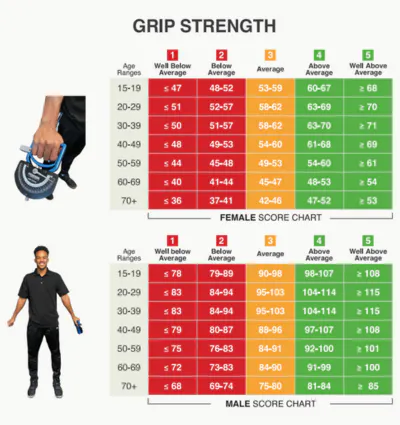
Results are interpreted using sex- and age-specific normative data provided by CSEP. This standardized approach identifies individuals whose grip strength falls below expected ranges, enabling early intervention. (See grip strength score table below).
Medcan recommends aiming for above average or higher scores, as these are linked to reduced chronic disease risk and improved functional independence. Post-test interventions often include structured resistance training 2–3 times per week, focusing on full-body strength and grip-specific exercises like rows, carries, and curls.
Three strategies for improving grip strength
While improving grip strength doesn’t directly enhance every aspect of health, it offers significant benefits.
A stronger grip supports mobility, balance, and independence. Plus, exercises that improve your grip strength, like lifting weights, also tend to support increased bone density, improve metabolic health, and contribute to reduced fall risk.
Once you know your grip strength number, you can take action to improve or maintain your grip strength. Here are three simple ways to improve grip strength:
- Engage in resistance training: Incorporate exercises that challenge both arms and legs while gripping and lifting weights, like a dumbbell squat to press.
- Use appropriate intensity: Start light and gradually progress to moderate and heavy loads. Include isometric holds and compound movements like rows and deadlifts.
- Adopt a holistic strength strategy: Add core exercises like planks and functional grip activities like farmer’s carries to enhance overall stability.
The next time you think about your health metrics, don’t overlook the power in your hands. Your grip is one important - and easy to obtain - predictor of your well-being, and more than a measure of muscle; it’s a window into your future health.
Take action
Measure your grip strength once a year and track your improvements.
Learn more about Medcan's Annual Health Assessment. Grip strength is one of the 100 biomarkers included in the assessment, which leverages the latest in technology and clinical innovation to get a comprehensive picture of your health and wellness.
The assessment also provides you with same-day results and personalized recommendations. It helps you identify risk areas and increases the opportunity for early detection of significant health concerns, such as cancer, heart disease, and diabetes. Learn more here.
This article was written by Medcan’s editorial team in collaboration with our clinical innovation team with review and contribution from Dr. Andrew Miners at Medcan.
Note: This information is intended for educational purposes and is not a substitute for professional medical advice, diagnosis, or treatment.


