Think you’re sleeping well? These four biomarkers tell the real story
48% of Canadians say they struggle with sleep - here are four metrics to track to know if your sleep is quality
According to the latest 2025 Canadian Community Health Survey by Statistics Canada, 48% say they struggle with sleep. Not surprisingly, our digital habits play a role - two‑thirds of Canadians are still on their devices within 30 minutes of bedtime. Meanwhile, 78% report that their poor sleep is linked to anxiety.
As we move into a new year and the winter months - when fragmented sleep is also shown to rise - it’s a natural moment to check in: How are you sleeping? And if you are thinking about your health proactively, putting quality sleep at the top of your list is one of the smartest moves you can make.
But here’s the catch on sleep: Even if you think you're sleeping fine, it’s hard to know whether your body is truly getting deep, restorative rest without looking at biomarkers for sleep.
While a sleep study is the gold standard for assessing sleep quality, it isn’t the only way to understand how well you’re sleeping. Certain biomarkers are easy to obtain and can be valuable clues and reveal what’s really happening while you snooze.
- 48% Canadians report struggling with sleep, and factors such as stress, anxiety, and screen use before bed may be contributing.
- Research shows that 7 to 9 hours of sleep per night is associated with the best health outcomes.
- Sleep quality matters just as much as duration, with deep sleep and REM sleep playing critical roles in recovery.
- Heart Rate Variability (HRV), blood glucose and HbA1c, iron levels, and C-reactive protein (CRP) are biomarkers that can reveal issues related to sleep quality.
- Tracking sleep-related biomarkers through blood testing, cardiac monitoring, or a sleep study can help identify root causes.
The link between sleep quality and long‑term health, plus how many hours to aim for
Sleep is not just about feeling rested. It keeps your overall health in check and has a strong link to longevity. And while it might seem like a passive activity, it’s highly active full‑body repair mode.
Years of data, and numerous sleep studies, show that 7-9 hours is the scientifically proven standard to aim for.
A recent 2025 meta‑analysis based on 79 publications, more than 2.1 million participants, and one of the most comprehensive sleep analyses, reported these results:
- Sleep <7 hours increases all‑cause mortality by 14%
- Sleeping ≥9 hours increases risk by 34%
The study also found that both men and women experience higher mortality with too little or too much sleep. However, long sleep (≥9 hours) increases risk more in women, while short sleep slightly increases risk more in men.
However, the quantity of hours only matters if it’s quality sleep.
Quality sleep depends on the balance and continuity of all sleep stages, including deep sleep and REM. Deep sleep is the phase where brain waves slow and many of the body’s major repair mechanisms are most active. However, REM and light sleep also play essential roles in cognitive health, emotional regulation, and overall sleep quality.
So how do you know if your sleep is quality? Track your biomarkers.
4 biomarkers that shed light on sleep quality
To help keep your health in check, there are four sleep biomarkers you’ll want to keep an eye on:
Heart Rate Variability (HRV)
Heart Rate Variability (HRV) is the variation in time between consecutive heartbeats, measured in milliseconds. It’s a key indicator of your autonomic nervous system balance, which is how well your body manages stress and recovers.
A high HRV suggests good recovery, resilience, and adaptability, while a low HRV can signal stress, fatigue, or poor recovery. A high LF/HF ratio (low-frequency to high-frequency HRV) is associated with poorer sleep quality.
HbA1c and fasting glucose
Good sleep helps keep blood sugar stable. Meanwhile, bad sleep can raise fasting glucose and increase your risk of diabetes.
Two important blood biomarkers doctors look at are fasting glucose - your blood sugar after not eating overnight - and Hemoglobin A1c, also known as glycated hemoglobin, and clinically known as HbA1c - a measure of your average blood sugar over the past few months.
Fragmented sleep can make your body less sensitive to insulin, which helps move sugar from your blood into your cells for energy. Poor sleep also messes with hormones that make your liver release more sugar and make you crave sweet foods.
Iron Studies (Ferritin, Transferrin Saturation, Iron, TIBC) and Hemoglobin
Iron studies refer to a panel of blood tests that assess how much iron is in your body and how well it’s being used.
Low iron is a well-established driver of Restless Legs Syndrome (RLS) and fragmented sleep. Meanwhile, low hemoglobin reduces oxygen delivery to the brain and tissues, daytime sleepiness, and difficulty falling or staying asleep.
Women of reproductive age are particularly susceptible to low iron levels due to menstruation. So, if you fall into that category, when you feel fatigued, this is one of the first biomarkers your doctor is likely to check.
C-reactive Protein (CRP)
Poor or irregular sleep can raise levels of C-reactive protein (CRP), which is a key marker of inflammation in the body. Research also shows that higher CRP levels are linked to an increased risk of heart disease, heart attack, and stroke. In short, when your sleep suffers, your heart health can too.
Your doctor will measure CRP or hs‑CRP, which measure the same protein. However, hs‑CRP is a more sensitive test that measures much lower levels of CRP and is used primarily to assess low‑grade inflammation, especially related to cardiovascular risk.
How to access key biomarkers for sleep
Wearables like the Oura Ring, Fitbit, Apple Watch, can be useful for tracking HRV. However, there’s a caveat: They are consumer products, not medical grade, and reliability can be an issue.
Our physicians recommend a Holter Monitor, which is a portable EKG device worn for 24+ hours to continuously record heart activity during sleep. It is the gold standard in healthcare. These devices track key heart biomarkers including HRV. They can catch rhythm issues missed by standard EKGs.
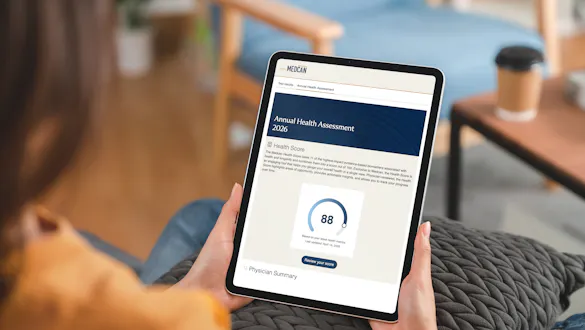
The best way to review biomarkers linked to glucose, iron, and CRP is with a blood analysis, such as the blood panel included in Medcan’s Annual Health Assessment. It includes a full Iron Studies panel along with an analysis of your hemoglobin levels, hsCRP (high-sensitivity CRP) and HbA1c and glucose.
Signs it’s time you need deeper sleep insights
These signs and symptoms suggest it may be time to see your doctor to check your biomarkers for sleep:
- You sleep 7–9 hours but still feel tired
- You fall asleep during the day
- You snore loudly or wake up gasping, choking, or short of breath
- You wake up often at night or too early
- Your legs feel restless or jerk at night
- You wake with frequent morning headaches
- Your mood, focus, or energy seem impacted by poor sleep
- You rely on alcohol, cannabis, or sleep meds to sleep
- Your sleep pattern suddenly changes without explanation
After a clinical consultation, your doctor may take a blood panel or may recommend a deeper sleep assessment to assess your sleep biomarkers. Then, once you have tangible data, you and your doctor have clarity about what lifestyle changes to make.
For instance, elevated glucose might signal diabetes and prompt follow-up testing and positive lifestyle changes, which leads to better sleep and overall health. Or, if your iron levels are low, adding iron-rich foods or supplements might be a simple way to restore balance. And even when results fall within the normal range, optimizing them can unlock better energy, recovery, and performance.
Next steps
Learn more about Medcan’s Annual Health Assessment, which includes biomarkers for sleep as part of the 100+ including ones for sleep.
Think it’s time for a deeper sleep analysis? Learn more about Medcan’s Home Sleep Study. The Home Sleep Study allows you to complete the study entirely from the comfort of your own home, and includes state-of-the-art, clinical sleep study device (WatchPAT One) with a remote sleep consultation, complete clinical end-to-end support and clinical oversight. The home sleep study is also included in our Enhanced Longevity Assessment, for those who are interested in a more comprehensive look at longevity biomarkers.
This article was written by Medcan’s editorial team with review and contribution from Dr. Chris Chan, sleep specialist.
Note: This information is intended for educational purposes and is not a substitute for professional medical advice, diagnosis, or treatment.